


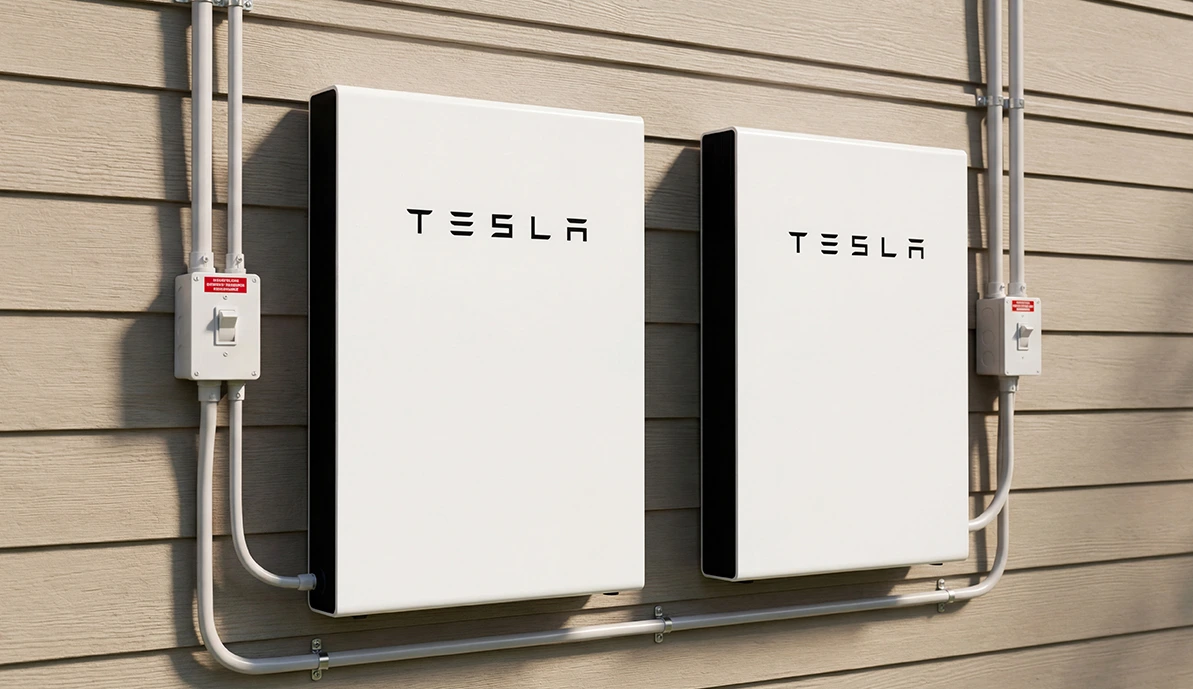
Tesla has issued a recall for approximately 10,500 Powerwall 2 home energy systems in the United States, citing a serious fire and burn hazard risk. The U.S. Consumer Product Safety Commission (CPSC) confirmed that the affected lithium-ion battery cells can overheat under certain conditions, potentially leading to smoke, flames, or even fires.
According to the recall notice, Tesla has received 22 incident reports involving the affected Powerwall 2 units. These include six cases in which the systems emitted smoke and five in which minor fires damaged property, though no injuries have been reported so far.
The root of the problem: defective third-party lithium-ion cells in a subset of Powerwall 2 units. Under specific conditions, these cells may fail, overheat, and enter a dangerous thermal runaway state.
To reduce risk, Tesla has remotely limited the charge level on online Powerwall 2 units identified by the recall. The company is coordinating free replacements for all affected systems.
Owners are being urged to check their Tesla app to see if their unit is part of the recall. According to the CPSC, Tesla has partially discharged online lithium-ion systems where possible as a preventive measure to curb overheating.
Why This Matters for Tesla’s Energy Business
The recall comes as Tesla’s energy division, which includes Powerwalls and large-scale energy storage systems, plays an increasingly important role in the company’s broader business. As Tesla pivots from being solely a carmaker to a clean-energy provider, issues like these threaten to dent customer trust and raise scrutiny of its battery-supply chain.
The move also highlights dependence on third-party cell suppliers. The fact that a supplier defect has affected thousands of installed units raises red flags for both safety and quality assurance in Tesla’s energy products.
Regulatory and Safety Implications
The recall underscores a broader systemic risk: large-scale residential lithium-ion storage systems are not immune to battery cell failures, just as smaller devices are. Regulators could push for tighter standards for cell sourcing, testing, and certification as more households adopt energy storage units.
Tesla’s recall also may set a precedent for how other battery-storage companies respond to thermal-risk issues. For consumers, the company’s proactive discharge and replacement process could become a case study in managing embedded fire risk. Still, the scale of the recall means the financial and reputational stakes remain high.
Read the Latest Battery News Shaping the Global Power Market
References
