


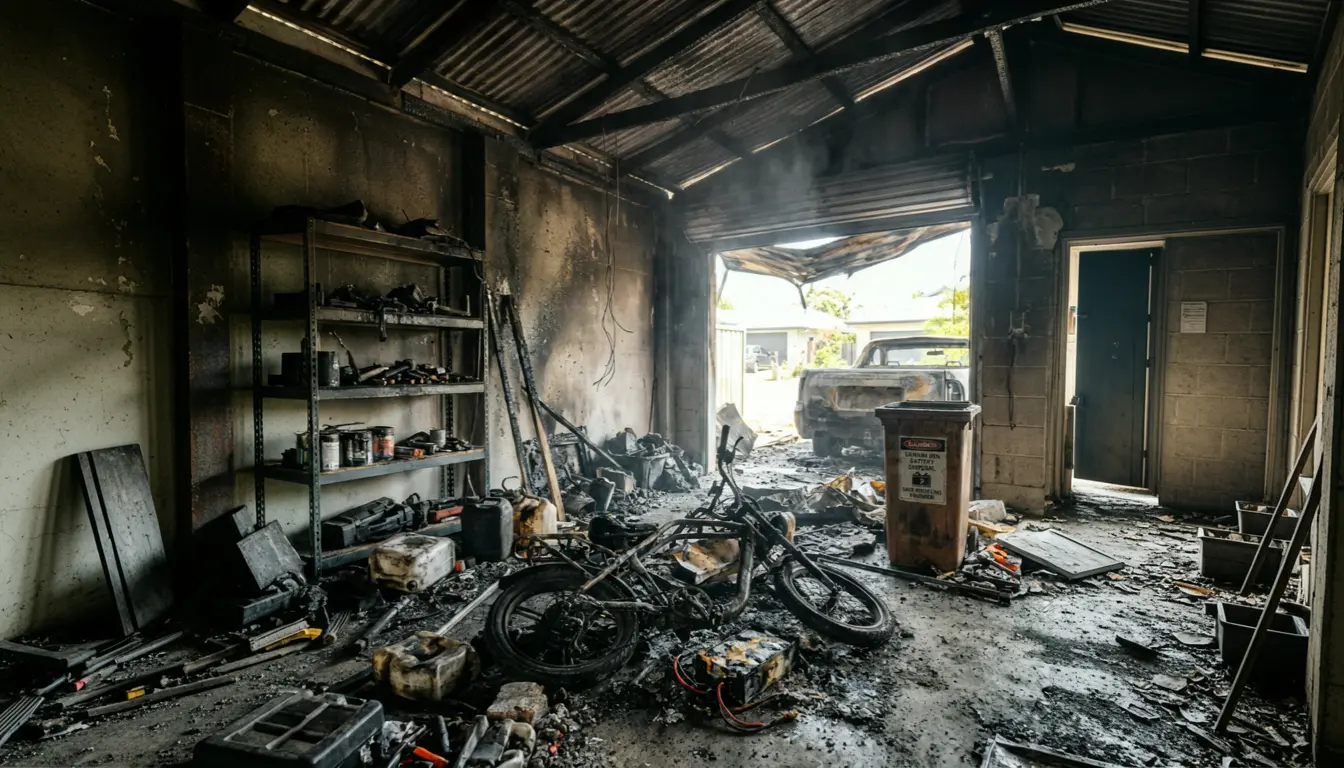
A growing wave of lithium-ion battery fires is placing waste management systems under increasing strain, with emergency services reporting a sharp rise in incidents linked to improperly discarded batteries entering kerbside bins, recycling facilities, and waste collection trucks.
A recent ABC News investigation highlights how everyday items powered by lithium-ion cells are becoming a major ignition source in Australia’s waste-handling network, triggering repeated fires and operational shutdowns.
The report identifies a clear pattern: batteries embedded in consumer electronics such as e-bikes, electric toothbrushes, cordless vacuum cleaners, power tools, and small household appliances are frequently being disposed of without proper isolation or safety handling. Once compressed, punctured, or exposed to heat during collection and sorting, these cells can enter thermal runaway. This self-accelerating failure mode produces intense heat, flammable gas release, and rapid ignition.
Waste operators and fire authorities note that these incidents are no longer rare exceptions. Across multiple regions, lithium-ion battery-related fires have become a recurring operational hazard, leading to temporary facility shutdowns, damage to sorting infrastructure, and increased risks to frontline workers. In several cases, collection vehicles have required emergency evacuation after smoke or fire detection systems were triggered mid-route.
The underlying issue is not limited to a single manufacturer or product line. Brands such as Samsung, Bosch, LG, and Xiaomi, as well as generic imported e-mobility devices, contribute to the expanding waste stream of battery-powered products. The challenge stems from widespread consumer misunderstanding of disposal requirements and the growing volume of embedded batteries in low-cost electronics.
Authorities emphasize that many incidents originate from batteries discarded in general waste rather than dedicated collection systems. Once inside compacted waste loads, even a small residual charge can be enough to ignite surrounding material. Recycling centers, designed to process mixed waste at scale, are particularly vulnerable due to mechanical crushing and sorting.
Fire services have repeatedly warned that lithium-ion battery fires burn hotter and are significantly more difficult to extinguish than conventional waste fires. They also carry the risk of re-ignition, requiring prolonged monitoring and hazardous cleanup procedures.
With battery adoption accelerating across mobility, electronics, and home energy storage, the volume entering waste streams is expected to increase further unless disposal systems keep pace.
A Warning Ignored
Lithium-ion batteries must never be discarded in general waste or recycling bins. As these energy cells accumulate across household devices, a single improperly disposed unit can trigger high-intensity fires capable of destroying waste infrastructure, endangering workers, and causing large-scale operational disruption. Without strict disposal discipline and enforced collection systems, waste streams risk becoming persistent ignition zones rather than safe material recovery networks.
Read the Latest Battery News Shaping the Global Power Market
Reference:
