


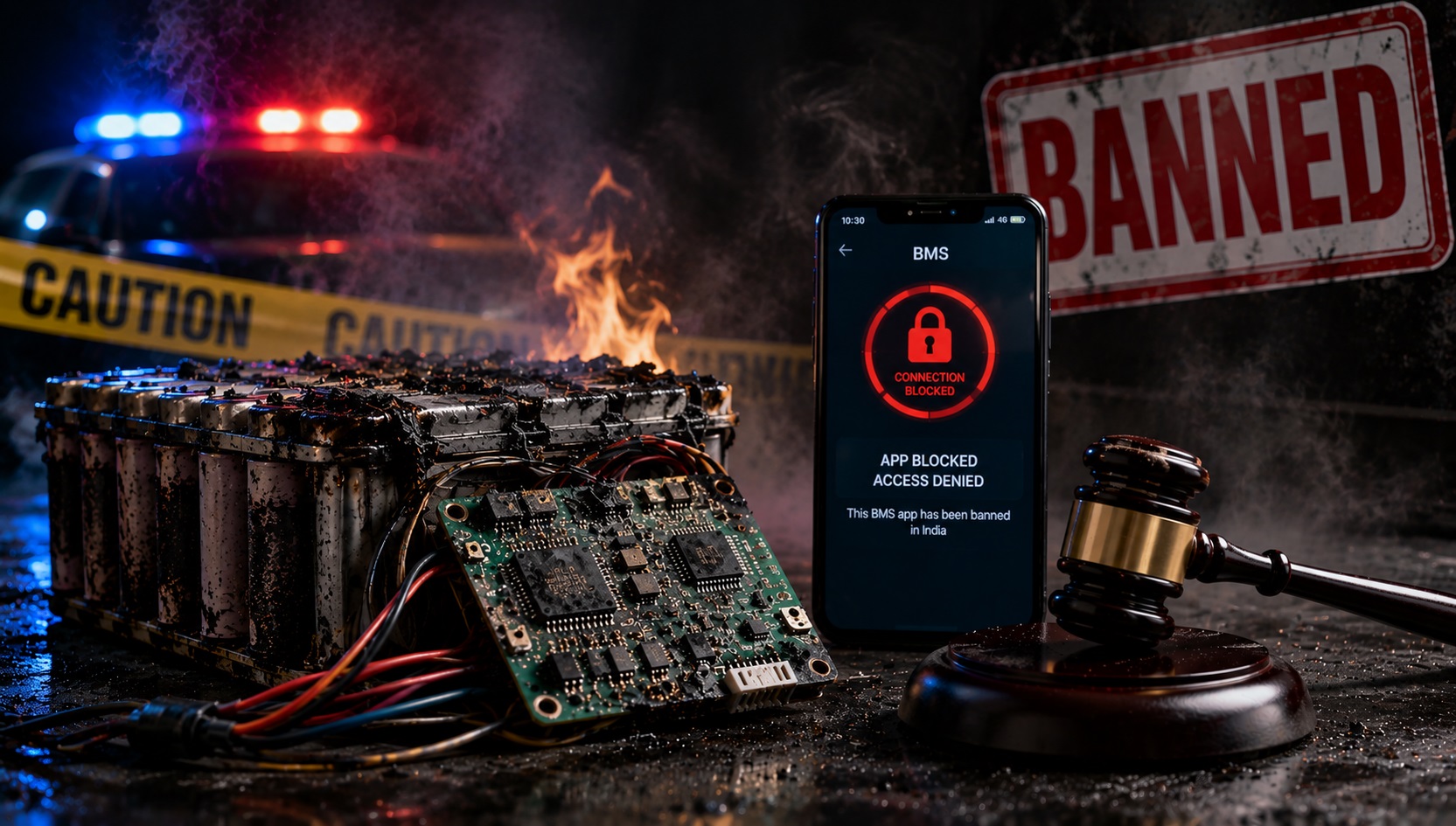
India’s rapidly expanding electric mobility sector has received another wake-up call after the Central Government ordered the removal of multiple battery management applications from Google Play Store and Apple App Store following reports that they were being misused to remotely disable e-rickshaws and other battery-operated vehicles. The action comes after viral incidents in which vehicles suddenly became inoperable via Bluetooth-connected Battery Management System (BMS) applications, raising serious concerns about cybersecurity in the country’s EV ecosystem.
Among the targeted applications are BAT-BMS, Lossigy, Epoch Li-ion, SMART BMS, JKBMS, and several other battery management apps reportedly linked to Chinese battery manufacturers. According to government officials, these applications could connect to compatible BMS units and were allegedly exploited to remotely switch off vehicles, leaving drivers stranded and posing potential public safety hazards.
The Ministry of Electronics and Information Technology (MeitY) responded by directing Google and Apple to remove the identified applications and warned that any software found facilitating unauthorised interference with battery-operated vehicles would face similar action. Officials have also urged app stores to strengthen their review processes before allowing applications that interact with critical vehicle systems.
For Battery News, the incident highlights a much larger issue than the removal of a handful of mobile applications. It exposes how modern lithium battery systems are becoming increasingly dependent on digital infrastructure, wireless connectivity and software-controlled Battery Management Systems. While these technologies improve battery monitoring and diagnostics, they also introduce new cybersecurity risks that can directly affect vehicle availability and public safety if security measures are inadequate.
The incident has also renewed concerns over the widespread use of imported battery packs and third-party BMS hardware in India’s electric mobility sector. Security experts have repeatedly warned that Bluetooth-enabled BMS devices without strong authentication or encrypted communication can become vulnerable to unauthorised access, especially when default settings remain unchanged.
As India accelerates its transition toward electric mobility, battery safety discussions can no longer focus solely on thermal runaway, charging practices or cell quality. Digital security is emerging as an equally critical component of battery safety. A compromised Battery Management System can immobilise vehicles, disrupt transport operations, and undermine public confidence in connected battery technologies.
The government’s swift intervention demonstrates that cybersecurity vulnerabilities within battery ecosystems are now being treated as a matter of national importance. For battery manufacturers, BMS developers and EV OEMs, the message is clear: future battery safety will depend not only on reliable lithium cells but also on secure software, robust authentication protocols and resilient Battery Management Systems capable of resisting unauthorised access.
Read the Latest Battery News Shaping the Global Power Market
Reference
- https://timesofindia.indiatimes.com/business/india-business/centre-removes-bat-bms-linked-apps-from-app-stores-after-e-rickshaw-remote-shutdown-reports/articleshow/132155150.cms
- https://www.thehindu.com/news/national/centre-orders-blocking-of-battery-management-apps-used-to-turn-off-e-rickshaws/article71179574.ece
