


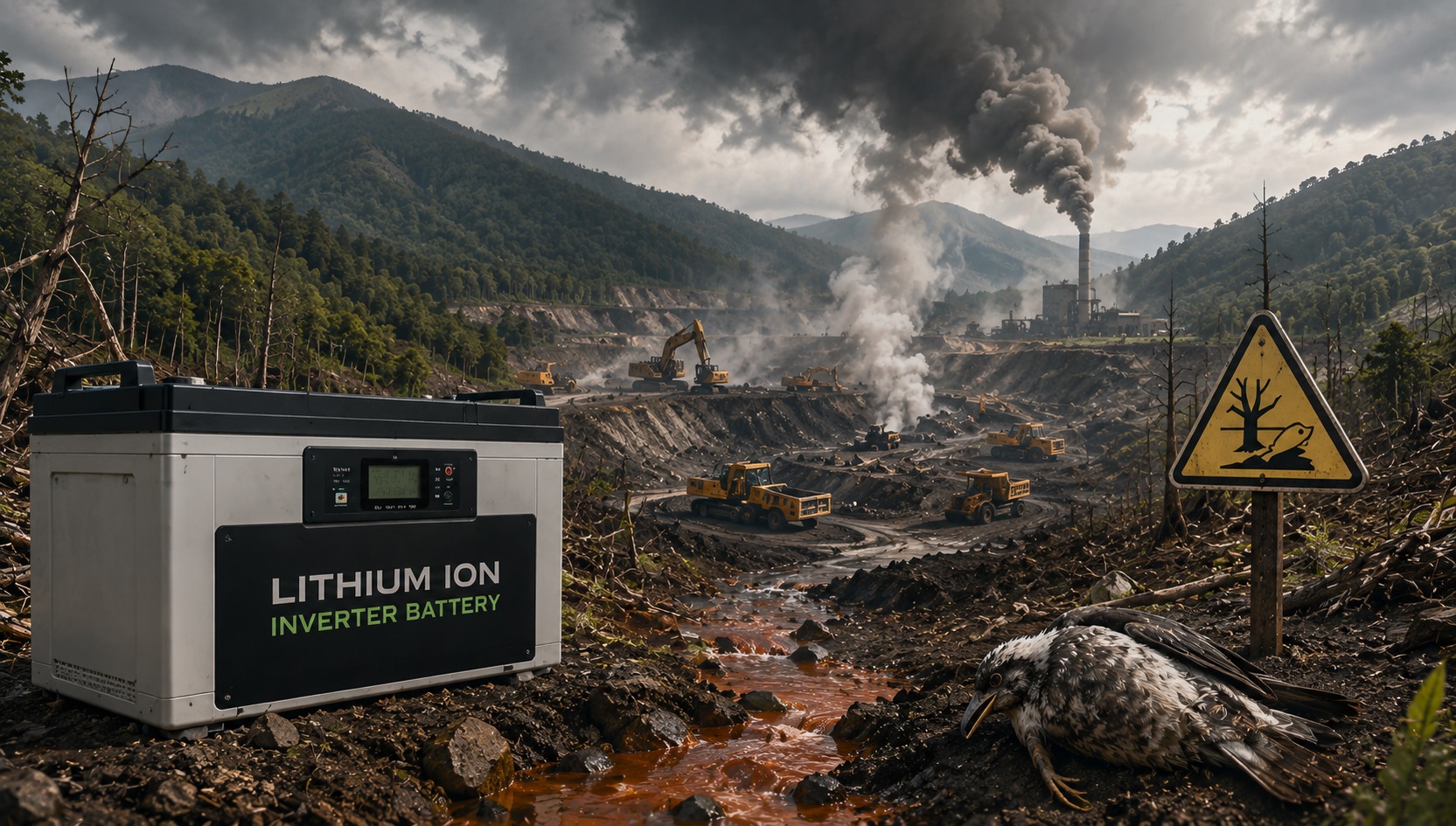
The U.S. Geological Survey (USGS) has announced that the Appalachian region may contain enough lithium to meet America’s import needs for more than a century. While battery manufacturers and electric vehicle advocates are celebrating the discovery as a strategic victory, environmental critics say the announcement highlights a growing problem: the relentless expansion of lithium mining across fragile landscapes.
For years, lithium has been marketed as the “green metal” powering the clean-energy revolution. Yet beneath the industry’s sustainability messaging lies a less-discussed reality. Every new lithium deposit represents another push to dig deeper into forests, mountains, and ecosystems in pursuit of the minerals needed to feed soaring battery demand.
The newly identified lithium resources stretch across parts of the eastern United States, including regions known for their biodiversity, natural habitats, and rural communities. Environmental observers warn that transforming these deposits into large-scale mining operations could dramatically alter landscapes through land clearing, blasting, road construction, and industrial development.
Critics argue that lithium is increasingly becoming the hidden environmental villain of the battery economy. Mining operations can strip vegetation, disturb topsoil, generate dust emissions, and leave long-lasting scars on the land. Heavy machinery, mineral processing, and transportation activities can contribute to air pollution, while disturbed soils may increase erosion and sediment runoff into nearby waterways.
The risks extend beyond the immediate mine site. Scientists have repeatedly warned that habitat fragmentation and industrial expansion can place additional pressure on wildlife populations. Sensitive species often struggle when natural ecosystems are divided, degraded, or replaced by mining infrastructure. Conservation groups fear that growing demand for lithium could accelerate biodiversity loss in regions already facing environmental stress.
The irony, critics say, is difficult to ignore. Technologies promoted as environmentally friendly are driving unprecedented demand for raw materials that require intensive extraction. As governments continue pushing battery-powered transportation and large-scale energy storage systems, the search for lithium is expanding into new territories around the world.
The Future UncertaintyÂ
The USGS discovery may strengthen America’s domestic supply chain, but it also raises uncomfortable questions about the true environmental cost of the lithium economy. If every step toward a battery-powered future requires larger mines, more land disturbance, and greater pressure on ecosystems, then the industry faces a challenge that marketing campaigns alone cannot solve.
For opponents of lithium expansion, the Appalachian discovery is not a triumph. It is a warning that the battery industry’s hunger for minerals continues to grow—and so do the environmental consequences.
Read the Latest Battery News Shaping the Global Power Market
ReferenceÂ

