


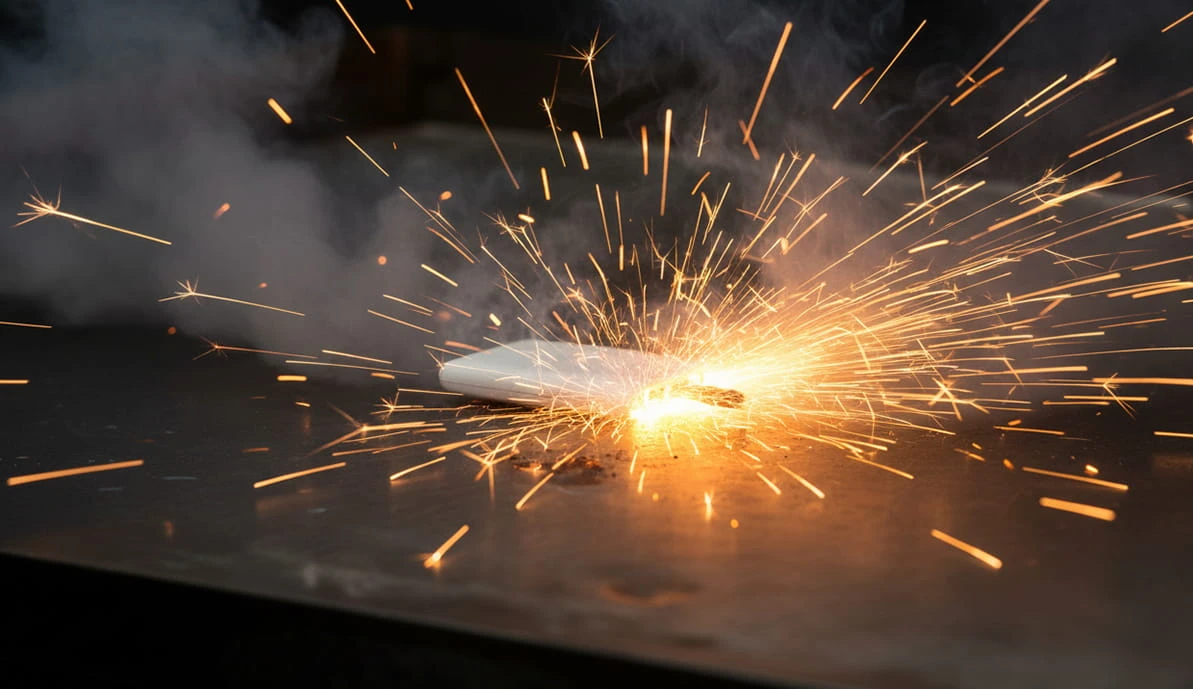
Japan’s Consumer Affairs Agency (CAA) has published a December 5, 2025, update revealing 38 serious product accidents involving fires, explosions, and other hazards tied to recalled products with lithium-ion batteries and related equipment. The announcement highlights ongoing safety risks associated with lithium battery-powered devices, regulators say.
The published report under the Consumer Product Safety Act identifies multiple cases where lithium-battery-equipped chargers, accessories, and tools were involved in fire and damage incidents, including imported battery chargers and USB cables used with electric shavers. The report is based on manufacturer and distributor accident reports and covers products already subject to recall or exchange measures.
Among the products referenced are lithium battery-embedded chargers (eight cases), electric shavers, rechargeable batteries, projectors, vacuum cleaners, and portable speakers, as well as lithium-ion batteries used in power tools and electric bicycles.
The CAA’s quarterly report serves as both a public-safety disclosure and a reminder to consumers of the dangers posed by defective or aging lithium battery products. Even products that have been recalled due to fire risk are still being reported in accidents when not properly returned or replaced.
“Consumers should immediately stop using affected devices, follow recall instructions, and take extra caution with all lithium-ion battery products to prevent fire or injury,” said a CAA spokesperson.
The agency encourages consumers to check recall lists and dispose of unsafe batteries in accordance with local hazardous-waste rules, as improper disposal can create additional fire risks at waste collection and recycling facilities.
Lithium-ion batteries, prized for their high energy density and compact size, are widely used in smartphones, power tools, e-bikes, and portable chargers. However, researchers and safety agencies note that these batteries can be prone to thermal runaway, overheating, and ignition if damaged, improperly charged, or manufactured poorly. Accidents involving overheating and fires have been increasing globally as lithium battery use grows.
Earlier government electricity safety alerts have also warned that lithium batteries can ignite when subjected to heat, impact, or defects, particularly in mobile power banks and similar devices.
Safety experts advise that charging should be continuously monitored, devices showing signs of swelling or overheating should be taken out of service, and non-functioning lithium batteries should be recycled at designated hazardous-waste facilities. Following these precautions, they say, can significantly reduce fire risk in homes and workplaces.
Read the Latest Battery News Shaping the Global Power Market
References
