


Authorities Warn of Escalating Risks as Faulty Batteries Spark Global Fire Concerns
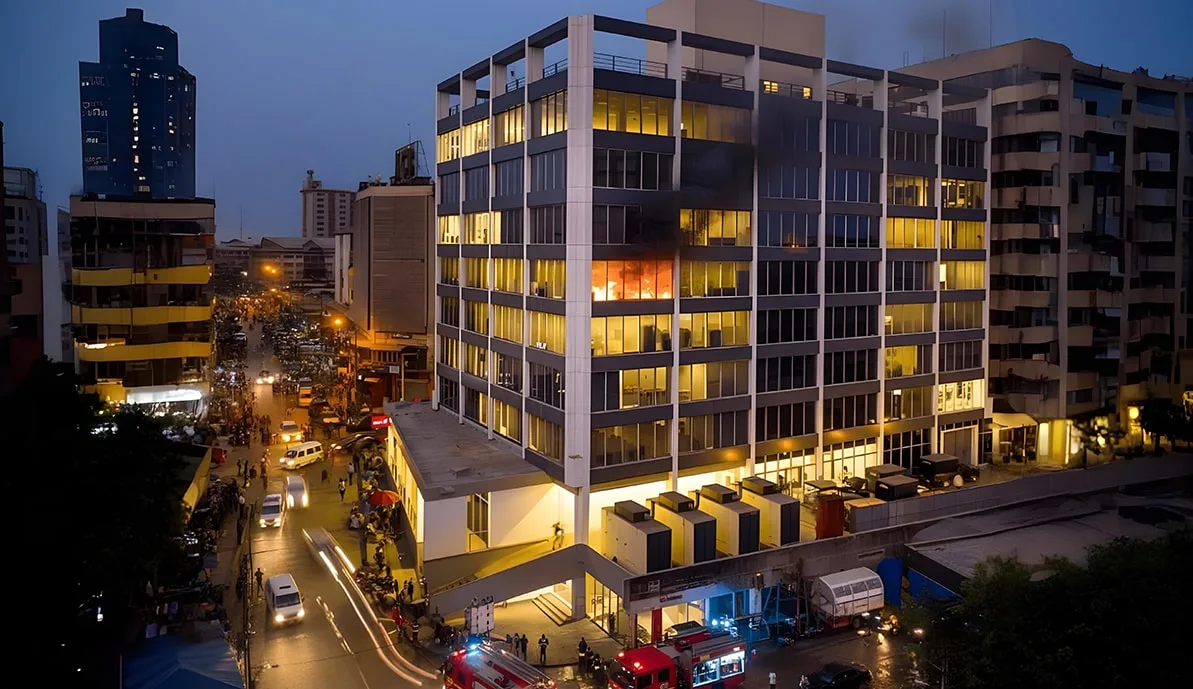
LAGOS, Nigeria — Panic and chaos erupted in the heart of Lagos when a deadly fire tore through the Afriland Tower, leaving trails of destruction and renewed fears over the safety of lithium-ion inverter batteries widely used across homes and businesses. Authorities have confirmed that the blaze, which broke out late Monday night, was triggered by a malfunctioning lithium-ion battery system used for backup power in the high-rise building.
Fire officials described the incident as “a preventable disaster caused by unstable technology,” pointing to overheating within the battery pack that led to a chain reaction explosion. The inferno spread rapidly through several floors of the building, sending thick plumes of smoke across the Lagos skyline and forcing hundreds to flee into the streets.
“This was not just a fire, it was an explosion waiting to happen,” said a senior Lagos State Fire Service official. “Lithium-ion batteries are being installed everywhere without proper regulation, and the public is paying the price.”
For years, lithium-ion batteries have been marketed as a clean and efficient energy solution, powering everything from phones and electric vehicles to inverter systems used during Nigeria’s frequent power outages. However, experts now warn that these batteries pose serious fire risks when poorly manufactured, improperly installed, or operated in hot environments.
In the Afriland Tower case, investigators found evidence of a thermal runaway — a rapid, uncontrollable reaction that causes the battery to overheat and ignite surrounding materials. Once the reaction begins, the fire can’t be easily stopped; lithium batteries burn at extremely high temperatures and can reignite even after being doused.
“Consumers have been misled into believing these batteries are safe,” said energy safety analyst Bamidele Ogunleye. “The truth is, lithium-ion technology is volatile. A single fault, a manufacturing defect, or a heat spike can cause an explosion. The Lagos fire proves that again.”
The Lagos disaster is not an isolated case. Similar lithium-ion battery fires have erupted around the world in the past year.
In California, a fire at a power plant in Moss Landing prompted mass evacuations. In South Korea, an energy storage facility exploded, injuring workers. In Germany and Japan, multiple residential and transportation-related fires have been linked to battery malfunctions.
The pattern is alarming, yet the technology continues to flood markets, often with little or no oversight.
“Every month we’re hearing about another battery fire, in homes, in cars, in offices,” said an emergency response official who spoke on condition of anonymity. “The push for ‘green’ energy has blinded people to the safety risks.”
In Nigeria, the situation is even more precarious. The demand for inverter systems has surged as citizens seek alternatives to unreliable electricity supply. Many consumers turn to cheap, imported lithium-ion batteries from unverified sources. Few of these products undergo safety testing or certification.
According to market analysts, the influx of substandard lithium batteries has created a ticking time bomb in residential and commercial buildings across the nation.
“We’re sitting on a national hazard,” said Ogunleye. “There’s no mandatory fire-safety inspection for these installations, no certification process, no consumer education. The Afriland fire should serve as a wake-up call.”
Lagos authorities have now launched an investigation into the suppliers and installers involved in the Afriland Tower system. Early reports suggest that the batteries used were imported from Asia and assembled locally without compliance with international fire-safety standards.
Responding firefighters described battling not just flames, but also clouds of toxic gas emitted from the burning batteries, including hydrogen fluoride, a highly corrosive compound that poses severe respiratory hazards.
“It’s not like fighting an ordinary electrical fire,” said one firefighter. “Once a lithium battery ignites, it releases poisonous smoke and can reignite multiple times. We had to withdraw several times just to stay alive.”
Videos circulating on social media showed dramatic scenes of explosions within the building, with fireballs erupting from the windows. Residents nearby reported feeling shockwaves as emergency crews fought for hours to contain the inferno.
While the official casualty count remains under review, several people were hospitalized for smoke inhalation and minor injuries. Businesses operating in the tower have reported significant property loss, and experts estimate millions of naira in damage.
Insurance experts warn that many policies may not cover fires caused by faulty electrical equipment, leaving tenants and building owners to bear the full financial impact.
“This is a huge blow,” said one affected business owner. “We trusted the system to provide clean energy backup, not to burn our offices down.”
In the wake of the disaster, consumer groups are demanding urgent government intervention, including bans on uncertified lithium-ion products, mandatory fire-resistant installations, and a nationwide awareness campaign on battery safety.
“People deserve to know what they’re putting in their homes,” said consumer advocate Ifeoma Adeyemi. “These products are being sold as the future of energy, but they are turning into fire traps.”
Until more burdensome regulations and enforcement are implemented, experts warn that similar incidents will likely continue, possibly with even deadlier consequences.
A Warning Ignored
The Afriland Tower inferno stands as a grim reminder of what can happen when modern technology outruns safety standards.
Lithium-ion batteries may power the future, but in the wrong hands, they can destroy it.
Authorities are urging the public to inspect all inverter systems, ensure proper ventilation, and avoid using uncertified lithium-ion batteries.
The message is clear: What Seems Like Clean Energy Could Be A Deadly Risk Waiting To Explode.
Read the Latest Battery News Shaping the Global Power Market
Deadly Lithium-Ion Battery Causes Tower Inferno in Lagos- Source
