


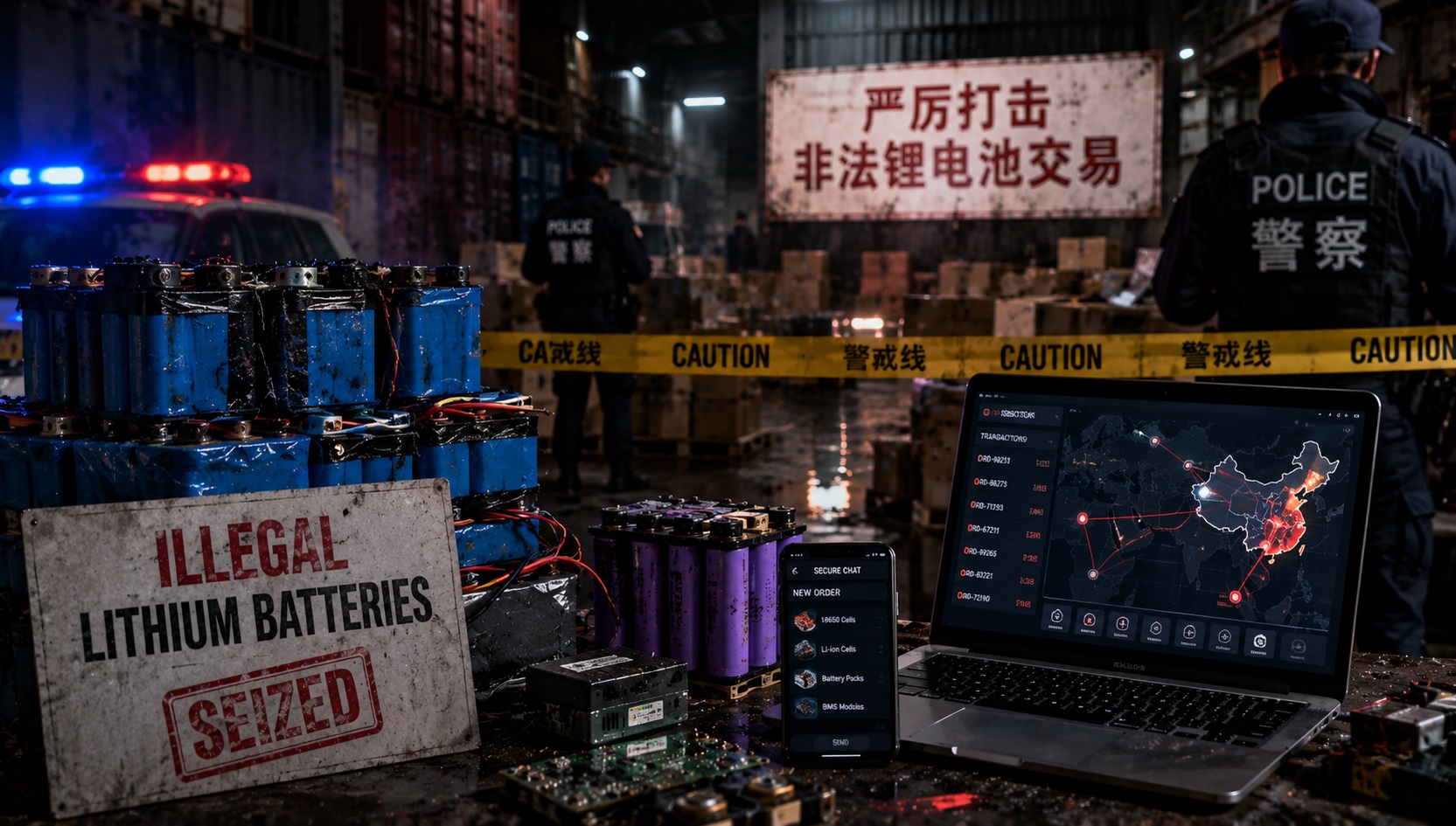
China’s booming lithium battery industry is facing renewed scrutiny after investigators uncovered an extensive underground network recycling retired electric vehicle (EV) batteries into uncertified battery packs destined for e-bikes, electric tricycles, and energy storage applications. The findings, highlighted in a recent investigation, have reignited concerns over battery safety, regulatory oversight, and the growing risks posed by the global trade in second-life lithium-ion batteries.
According to reports, Chinese authorities uncovered a black-market supply chain operating outside the country’s official battery recycling framework. Instead of sending end-of-life EV batteries to licensed recycling facilities, large quantities of used battery packs were allegedly diverted to unauthorized workshops where workers dismantled them, tested individual cells, and reassembled them into new battery packs without standardized quality control or safety certification.
Investigators found that many of these underground workshops lacked manufacturing licenses, safety testing procedures, and traceability systems. Despite these deficiencies, the recycled battery packs were reportedly sold into the expanding market for electric bicycles, electric tricycles, and low-speed electric vehicles, where demand for inexpensive batteries continues to grow.
Industry experts warn that retired lithium-ion cells often have inconsistent performance characteristics after years of service. Cells with varying levels of degradation, hidden internal damage, or reduced capacity may appear functional during basic testing but can fail unexpectedly under real-world operating conditions. When assembled into battery packs without proper engineering controls, these cells can significantly increase the risk of overheating, thermal runaway, and fire.
The investigation also revealed how illegal operators allegedly circumvented China’s formal battery recycling regulations by purchasing retired battery packs through unofficial channels. Authorities believe the underground market has become increasingly profitable as China’s electric vehicle fleet continues to expand, creating millions of aging lithium-ion batteries requiring responsible disposal or recycling.
For the global battery industry, the findings extend well beyond China’s borders. Many countries continue importing lithium battery products and components from international supply chains, making transparency and product traceability increasingly important. Experts have long emphasized that not all recycled batteries pose safety risks—licensed recycling and certified second-life battery programs remain an important part of the circular economy. However, batteries rebuilt outside regulated systems present significantly greater uncertainty regarding quality and long-term reliability.
The investigation also highlights the growing challenge facing regulators worldwide as demand for affordable lithium-ion batteries continues to rise. Without robust oversight, illegal recycling operations may introduce uncertified battery products into domestic and international markets, potentially increasing fire risks for consumers and businesses alike.
As governments accelerate the transition toward electrification, battery safety must remain a priority alongside sustainability. Stronger enforcement against illegal recycling operations, improved battery traceability, stricter manufacturing standards, and enhanced certification requirements will be essential to maintaining public confidence in lithium-ion technology.
The latest revelations serve as a reminder that while battery recycling is critical for the future of clean energy, it must be conducted within regulated, transparent, and safety-focused frameworks. Failure to do so could undermine both consumer safety and the credibility of the rapidly growing global battery industry.
Read the Latest Battery News Shaping the Global Power Market
Reference
