


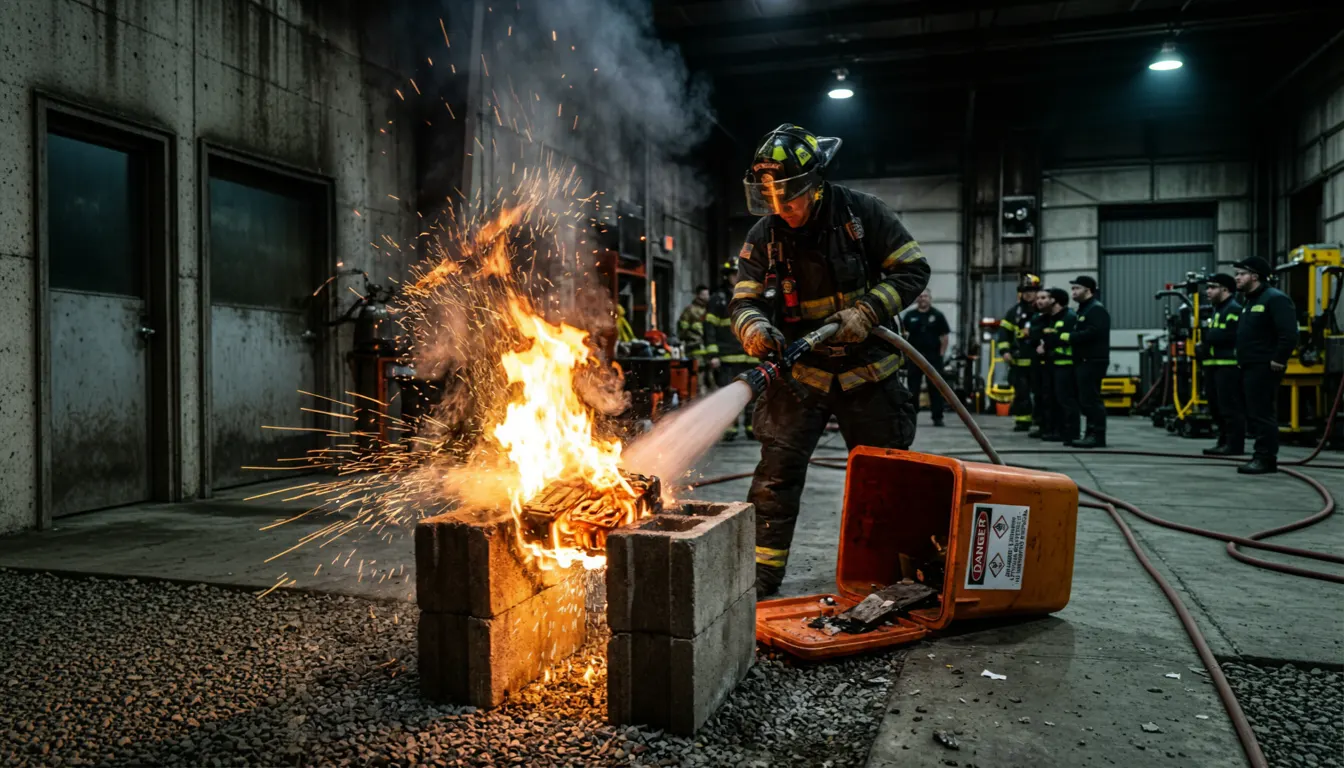
Fire safety specialists at Britannia Fire Ltd have raised renewed concerns about the escalating risks posed by lithium-ion batteries, following a growing number of fire incidents linked to e-mobility devices, consumer electronics, and energy storage systems. The warning comes amid broader industry recognition that battery-related fires are becoming more frequent, more intense, and increasingly difficult to control with conventional suppression methods.
According to Britannia Fire, rising incident data from e-bikes, e-scooters, and battery-powered household devices highlights a structural safety challenge rather than isolated product failures. The company notes that lithium-ion battery fires behave fundamentally differently from traditional combustion events, often driven by a process known as thermal runaway, where internal cell failure triggers rapid heat escalation, gas release, and sustained ignition.
In response to this growing risk profile, Britannia Fire has expanded its focus on specialist suppression solutions and on awareness campaigns for both residential and commercial environments. The company has also highlighted the increasing strain on fire services as battery fires occur in confined urban spaces, including residential buildings, garages, and waste-handling facilities.
The underlying issue is amplified by the scale of lithium-ion adoption. These batteries are now embedded across multiple sectors, from personal mobility devices and power tools to grid-scale storage systems. While brands such as Bosch, Samsung, LG Energy Solution, Xiaomi, and Segway-Ninebot have driven innovation in electrification, the rapid expansion of battery usage has outpaced consumer awareness around safe handling, charging, and disposal practices.
Fire experts emphasize that risks are often highest during charging cycles or when damaged batteries are improperly stored. Even minor physical impact, overcharging, or exposure to heat can destabilize internal chemistry, leading to rapid failure. Once ignited, these fires can reach extreme temperatures and may re-ignite even after initial suppression.
Britannia Fire has also pointed to the increasing complexity of modern battery packs, which makes early detection and containment more difficult. As energy density rises, the potential severity of thermal events increases, heightening concern for residential buildings, transport hubs, and recycling facilities.
Industry stakeholders are now calling for stronger regulatory alignment, improved battery design standards, and wider public education on safe usage practices.
A Warning Ignored
Lithium-ion batteries are no longer confined to controlled industrial systems; they are embedded in everyday life at scale. Without strict handling discipline, certified charging infrastructure, and proper disposal channels, even a single faulty or mismanaged battery can escalate into a high-intensity fire capable of rapid structural damage, endangering lives and overwhelming emergency response systems.
Read the Latest Battery News Shaping the Global Power Market
