


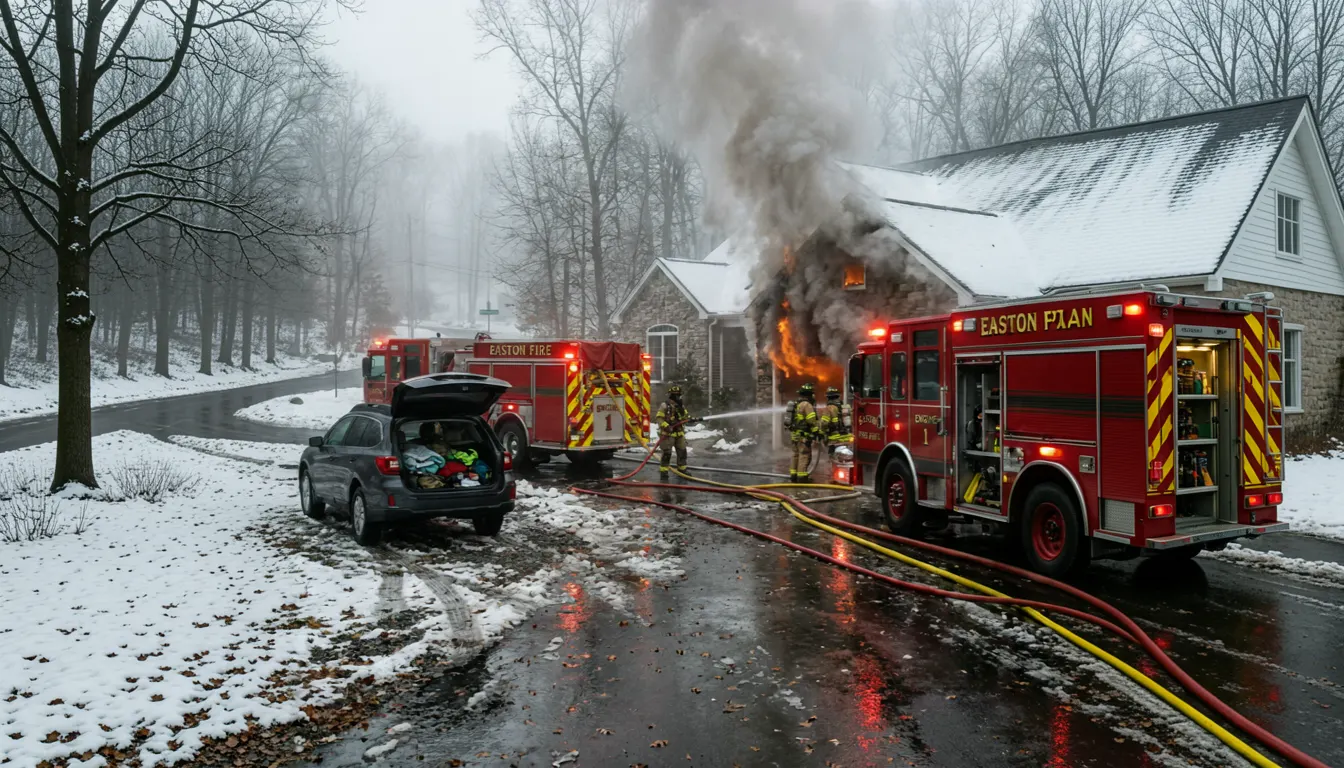
A recent garage fire in Easton, Connecticut, has renewed attention on the safety risks associated with lithium-ion batteries used in everyday consumer devices. According to local fire officials, the blaze on Tersana Drive was likely triggered by a lithium-ion battery that was actively charging inside the garage.
The fire broke out around 6:50 p.m. and was first noticed when firefighters responding to unrelated live-wire reports observed smoke coming from a nearby residence. The Easton Volunteer Fire Department confirmed that crews quickly contained the fire to the garage, preventing structural collapse and limiting overall damage. No injuries were reported, but the family was displaced overnight as a precaution.
Preliminary findings from the fire marshal’s office indicate that the ignition source was a battery mounted on a wall charging system. Officials believe the battery entered a failure mode consistent with thermal runaway, a condition in which internal heat builds rapidly and uncontrollably, often leading to fire or explosion.
Although the structural damage was estimated at over $30,000, authorities noted that rapid response helped avoid losses exceeding $1.4 million. The incident remains under investigation.
The fire is part of a broader pattern of residential incidents linked to lithium-ion energy storage systems, including batteries used in electric tools, e-bikes, scooters, and home energy setups. When these systems fail, they can burn at extremely high temperatures and are difficult to extinguish with conventional firefighting methods.
While the specific battery brand involved in the Easton incident has not been publicly disclosed, fire safety experts consistently warn that risk levels vary significantly depending on manufacturing quality, certification standards, and charging practices. Poor-quality or unverified batteries are more likely to suffer internal short circuits and overheating during charging cycles.
Fire departments across the United States have increasingly issued advisories on safe battery use, emphasizing proper charging supervision, the use of certified equipment, and avoiding wall-mounted or enclosed charging setups in high-risk areas, such as garages.
The Easton case reinforces a key concern for residential safety planning: lithium-ion batteries, while efficient and widely used, introduce a persistent ignition risk that can escalate rapidly under failure conditions.
As investigations continue, the incident adds to growing evidence that battery-related fires are no longer isolated events, but a structural safety challenge tied to the rapid expansion of electrified consumer devices in homes.
Read the Latest Battery News Shaping the Global Power Market
Reference:
