


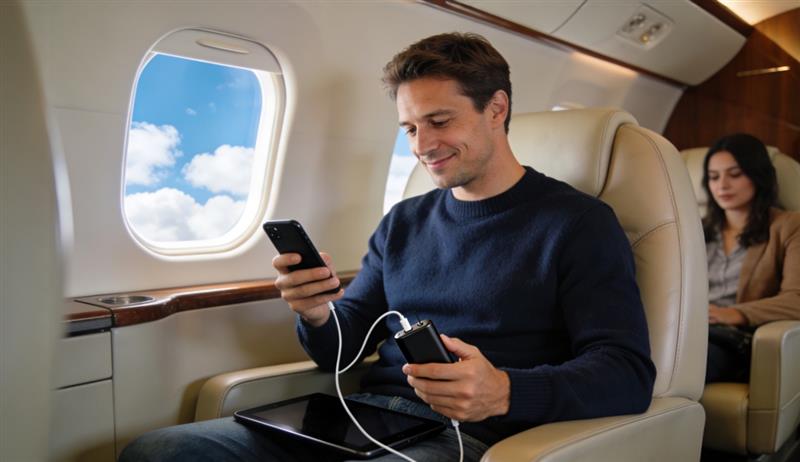
A recent mid-air safety incident involving a portable power bank has once again highlighted the potential dangers associated with lithium-ion batteries. The event occurred aboard an Alaska Airlines flight and has sparked renewed discussion about the risks posed by these batteries, especially in confined environments such as aircraft cabins.
According to reports, an Alaska Airlines flight was forced to respond to an onboard emergency after a passenger’s phone and power bank suddenly caught fire shortly after takeoff. The incident occurred about 15 minutes into the flight, when smoke and flames erupted from a lithium-ion battery pack being used to charge a phone. Cabin crew quickly intervened with fire extinguishers as passengers struggled to cope with the smoke filling the cabin. One passenger reportedly suffered minor injuries during the incident.
Eyewitnesses described flames reaching nearly a foot high before the burning device was thrown into the aisle. While the crew managed to contain the fire, the event underscores how quickly lithium battery failures can escalate into serious safety hazards during flight.
Lithium-ion batteries are widely used in everyday devices such as smartphones, laptops, e-cigarettes, and portable power banks. However, under certain conditions, including overheating, physical damage, manufacturing defects, or short circuits, these batteries can fail violently.
One of the most concerning risks is thermal runaway, in which the battery rapidly overheats and releases flammable gases. Once this chain reaction begins, the battery can ignite or even explode, producing intense heat and flames.
In the confined environment of an aircraft cabin, such incidents can be particularly dangerous. Even a small battery fire can generate dense smoke, cause panic among passengers, and result in potential injury if not quickly contained.
The increasing number of lithium battery incidents has prompted aviation regulators worldwide to introduce stricter rules regarding power banks and spare batteries.
Many airlines now prohibit storing power banks in checked luggage and require them to be carried in hand baggage, where cabin crews can quickly detect and respond to overheating devices. Aviation regulators in several countries have also banned the use of power banks to charge devices during flights due to fire risks.
Some airlines have gone even further, completely banning the use of portable chargers on board following multiple battery-related incidents across the aviation sector.
These regulations are designed to minimise risks, as lithium battery fires can spread rapidly and are more difficult to control than conventional fires.
The Alaska Airlines incident is not an isolated case. Aviation safety authorities have reported a steady increase in lithium battery-related incidents on aircraft over the past few years. Investigations into previous aircraft fires have also pointed to portable battery packs as potential ignition sources.
With billions of lithium-powered devices in circulation globally, experts warn that improper use, low-quality power banks, or damaged batteries could increase the likelihood of similar incidents in the future.
A Warning Ignored
The latest incident serves as a strong reminder that lithium-ion batteries, while convenient, can pose serious risks if mishandled. Passengers are increasingly being advised to use certified devices, avoid charging power banks during flights, and immediately report any overheating electronics to flight attendants.
As the world becomes more dependent on portable electronics and energy storage technologies, ensuring the safe handling of lithium batteries will remain a critical priority for the aviation industry and regulators alike.
Read the Latest Battery News Shaping the Global Power Market
