


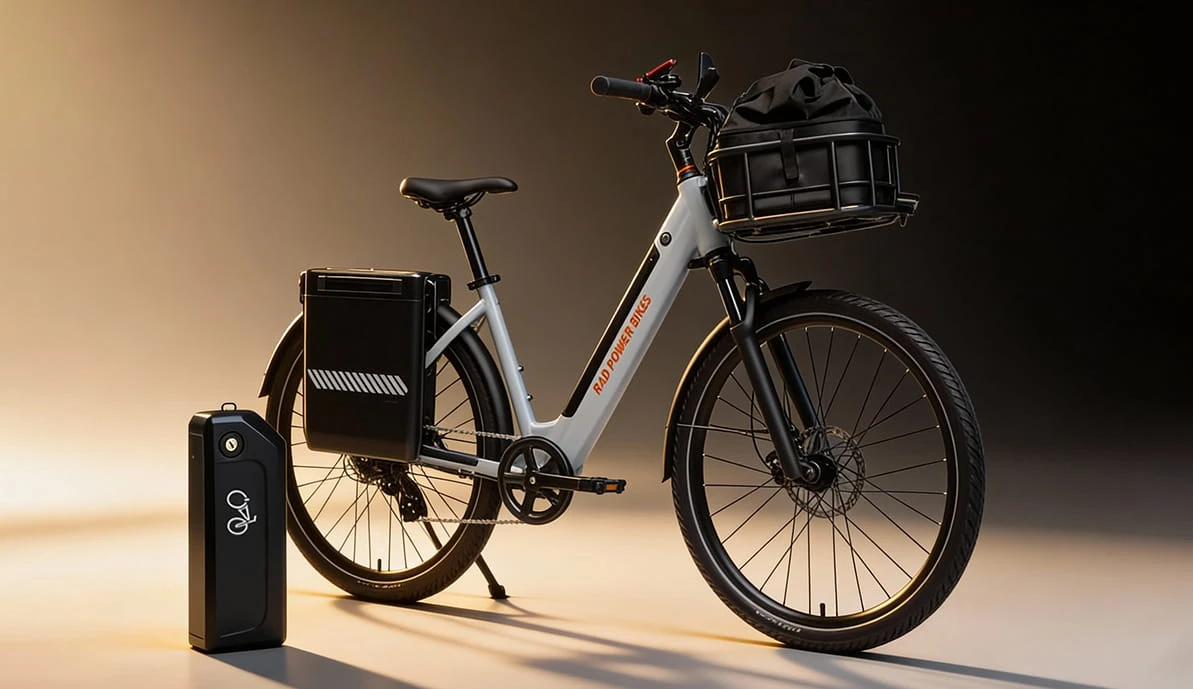
U.S. safety regulators have issued a striking warning to consumers to immediately stop using certain lithium-ion batteries for Rad Power Bikes e-bikes after dozens of reported fires, citing a significant fire and explosion risk that could lead to serious injury or death.
The U.S. Consumer Product Safety Commission (CPSC) on Nov. 24, 2025, published a public safety advisory urging owners to remove affected batteries from their bikes and dispose of them at hazardous waste facilities rather than in household trash or standard recycling streams.
The warning covers lithium-ion battery packs with model numbers RP-1304, RAD-S1304Y, and HL-RP-S1304, sold with several Rad Power e-bike models, including RadWagon 4, RadCity HS 4, RadRover High Step 5, RadCity Step Thru 3, and others. The batteries were also sold as replacement units for older bikes.
According to the CPSC notice, the batteries can “unexpectedly ignite and explode,” especially if the battery or harness has been exposed to water or debris, posing a heightened fire risk even when the e-bike is not in use or charging.
So far, the commission has received 31 reports of fire incidents involving these batteries, including 12 that caused property damage totaling about $734,500, though no fatalities have been officially reported in the document.
Consumer safety advocates warn that the public alert highlights lingering issues with lithium-ion technology, which, while wi