


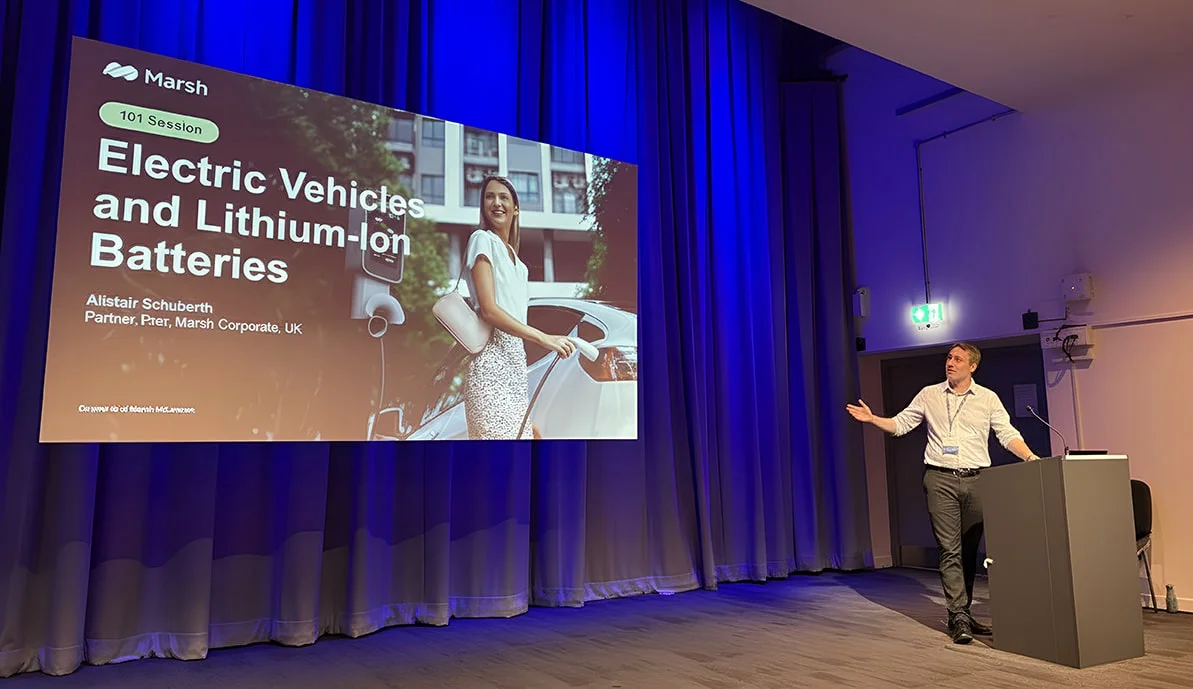
Airmic 2025 has placed lithium-ion battery safety back in the global spotlight, releasing new insights into how the world’s most widely used power source is becoming one of the decade’s most underestimated business risks. As industries accelerate digitalisation, electric mobility, and energy storage solutions, experts warn that the fire hazards linked to lithium-ion batteries are rising faster than risk controls can keep up.
According to specialists presenting at Airmic 2025, lithium-ion battery fires are not just more common; they are uniquely dangerous. Unlike traditional fires, they burn at extremely high temperatures, release toxic gases, and can reignite even after being extinguished. This “thermal runaway” effect has caused major incidents, ranging from warehouse fires and data centre shutdowns to transport accidents and consumer product recalls.
Risk engineers note that businesses across retail, logistics, aviation, hospitality, and manufacturing are increasingly affected. With the surge in electric vehicles, e-bikes, power banks, and handheld electronics entering workplaces, the risk is now “everywhere and growing.”
The report highlights several reasons behind the spike in battery-related incidents: poorly manufactured cells, damage during transport, improper storage, and the increasing presence of high-capacity batteries in confined indoor areas. Many fire events, experts say, begin invisibly, developing over hours before erupting into catastrophic flames.
At the summit, risk managers were urged to modernise their safety protocols. Traditional fire suppression equipment, especially water-based systems, often proves ineffective against lithium-ion battery fires. Instead, the guidance emphasises early-detection technologies, thermal imaging, segregation of charging zones, and strict procurement standards to prevent the use of uncertified or counterfeit battery products.
Insurance specialists at Airmic 2025 also warned that under-reporting of lithium-ion battery incidents is distorting the accurate scale of the threat. Many companies still treat these fires as isolated electrical accidents rather than a systemic risk. As a result, insured losses continue to rise while policies are being recalibrated to reflect the growing exposure.
Despite the concerns, experts stressed that lithium-ion batteries remain essential for today’s energy-dependent economy. The focus, they say, should be on strict governance, staff training, controlled charging environments, and improved design standards, not abandonment of the technology.
A Message
The overarching message from Airmic 2025 is clear: lithium-ion battery risks are preventable, but only if organisations acknowledge their scale and adopt modern safety strategies. As reliance on portable power continues to surge, businesses that fail to prepare may face severe financial and operational consequences in the coming years.
Read the Latest Battery News Shaping the Global Power Market
References
