


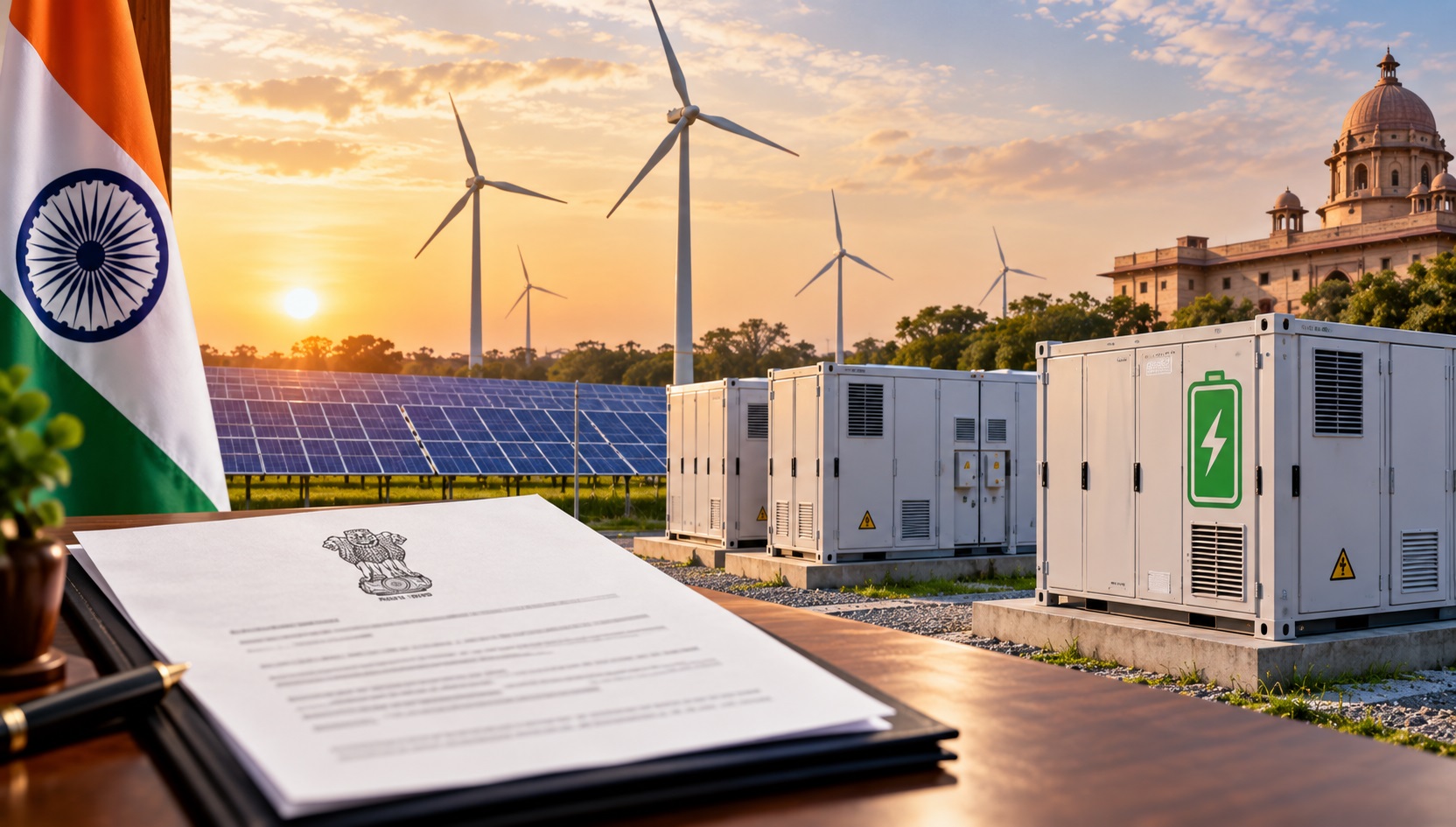
India is preparing to make battery storage mandatory for new government-backed renewable-energy projects, marking another major step in the country’s push to integrate energy storage into its expanding solar and wind infrastructure.
According to a draft regulation reported by Reuters on September 4, India plans to require all new government solar and wind projects to include battery storage from July 2027. The proposed measure aims to store renewable electricity when generation is high and dispatch it when demand requires it.
The move addresses a central challenge of renewable energy: intermittency.
Solar generation falls when sunlight disappears, while wind generation varies with weather conditions. Battery energy-storage systems can help bridge these fluctuations by storing electricity during periods of excess generation and releasing it when production declines.
From Backup Technology to Grid Infrastructure
India’s proposed requirement signals a change in how batteries are viewed.
Battery storage is increasingly moving beyond backup power for individual consumers and becoming part of national electricity infrastructure.
The policy could create additional demand for battery manufacturers, energy-storage developers and companies involved in battery management, power electronics and recycling.