


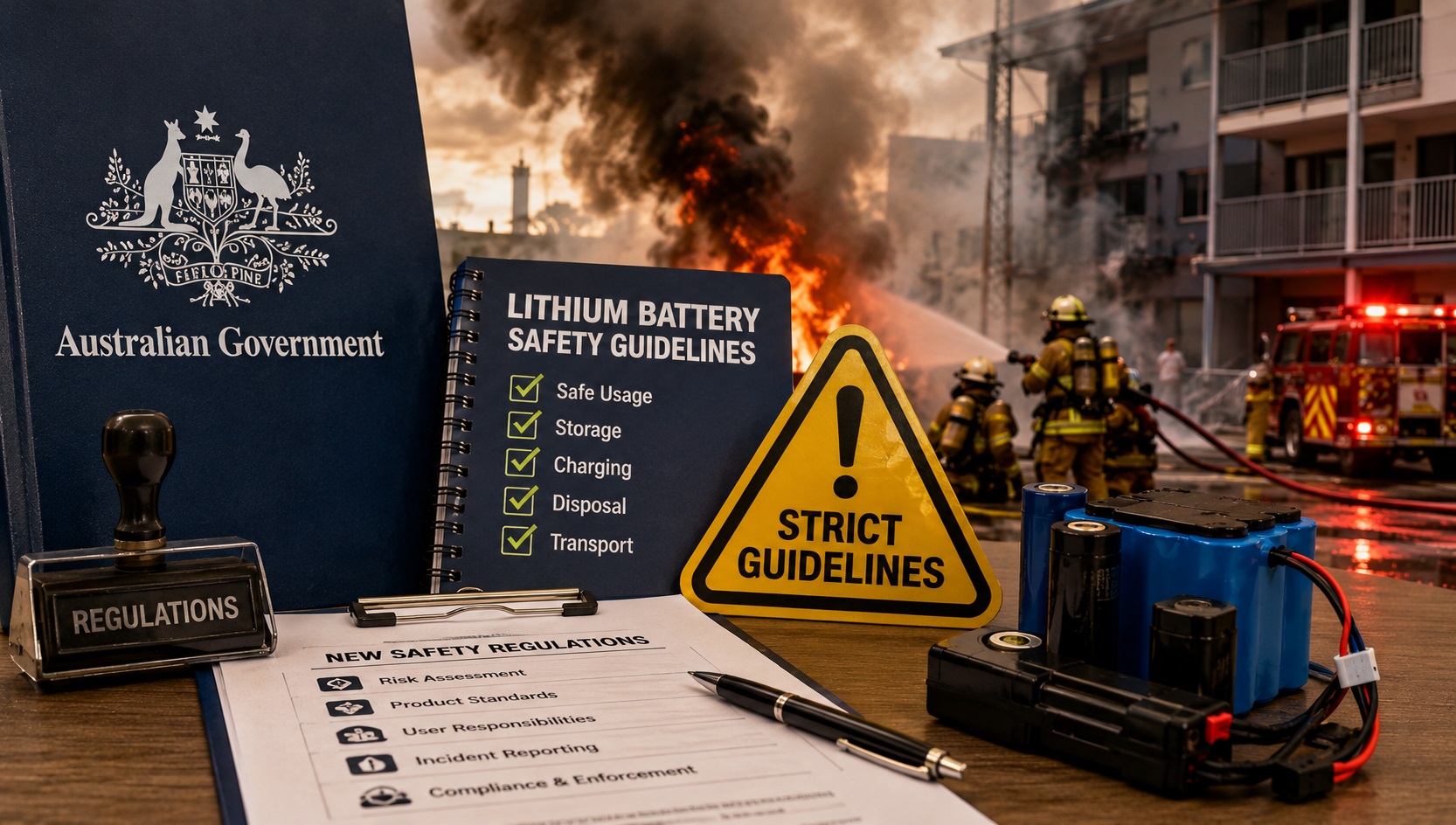
Australia has introduced some of its toughest battery safety measures to date after a sharp rise in lithium-ion battery fires prompted authorities to overhaul regulations governing battery recycling, disposal, and product stewardship. The move reflects growing concern among fire services and government agencies about the rising number of battery-related fires in homes, waste facilities, recycling centers, and commercial properties.
The New South Wales (NSW) Government recently announced mandatory battery product stewardship reforms aimed at reducing the number of fires linked to lithium-ion batteries. Under the new framework, battery manufacturers and importers will be required to fund the safe collection, recycling, and disposal of batteries sold within the state. Companies that fail to comply could face penalties of up to AUD 880,000, making the legislation one of Australia’s strictest battery safety initiatives.
Government figures reveal the scale of the problem. NSW recorded 332 lithium-ion battery fire incidents in 2025, while authorities have already responded to more than 60 battery-related fires during the first half of 2026. Many of these incidents involved rechargeable batteries discarded in household waste, damaged battery packs, or improperly recycled lithium-ion cells.
Fire officials warn that lithium-ion batteries can ignite with little warning if they are damaged, exposed to excessive heat, or improperly charged or disposed of. Unlike conventional fires, lithium battery fires can rapidly escalate through a process known as thermal runaway, releasing intense heat and toxic gases, making suppression significantly more challenging for emergency responders.
The growing concern is not limited to New South Wales. Fire authorities across Australia have launched public awareness campaigns urging consumers to avoid using damaged batteries, purchase only certified chargers, and never dispose of lithium-ion batteries in household garbage bins. Improper disposal has become a major contributor to fires at waste management facilities, where crushed batteries can ignite during collection and processing.
Australia’s latest reforms also reflect a broader global trend. As electric vehicles, energy storage systems, e-bikes, smartphones, laptops, and power tools continue to drive demand for lithium-ion batteries, governments are facing increasing pressure to strengthen regulations on battery safety throughout the product lifecycle.
While industry groups continue to promote lithium-ion technology as a cornerstone of the clean energy transition, regulators argue that stronger oversight is necessary to address the growing number of fire incidents linked to battery misuse, improper disposal, and inadequate recycling systems.
The Australian government’s latest action serves as a reminder that battery safety extends well beyond manufacturing standards. Proper handling, certified recycling, responsible disposal, and greater consumer awareness have become essential components of reducing the risks posed by lithium-ion batteries.
As battery-powered technologies become increasingly integrated into everyday life, Australia’s regulatory response may serve as a model for other countries seeking to reduce battery-fire incidents while balancing the continued expansion of electrification and renewable energy technologies.
Read the Latest Battery News Shaping the Global Power Market
